
Table of Contents
Introduction to Succession Planning
Every organisation reaches a moment when it must ask itself a difficult question: What happens when our best people leave?
This is not a question of pessimism. It is a question of responsibility. And for organisations in Nepal and across South Asia that are growing fast, the answer lies in one of the most underused tools in human resources: succession planning.
What Succession Planning Actually Means
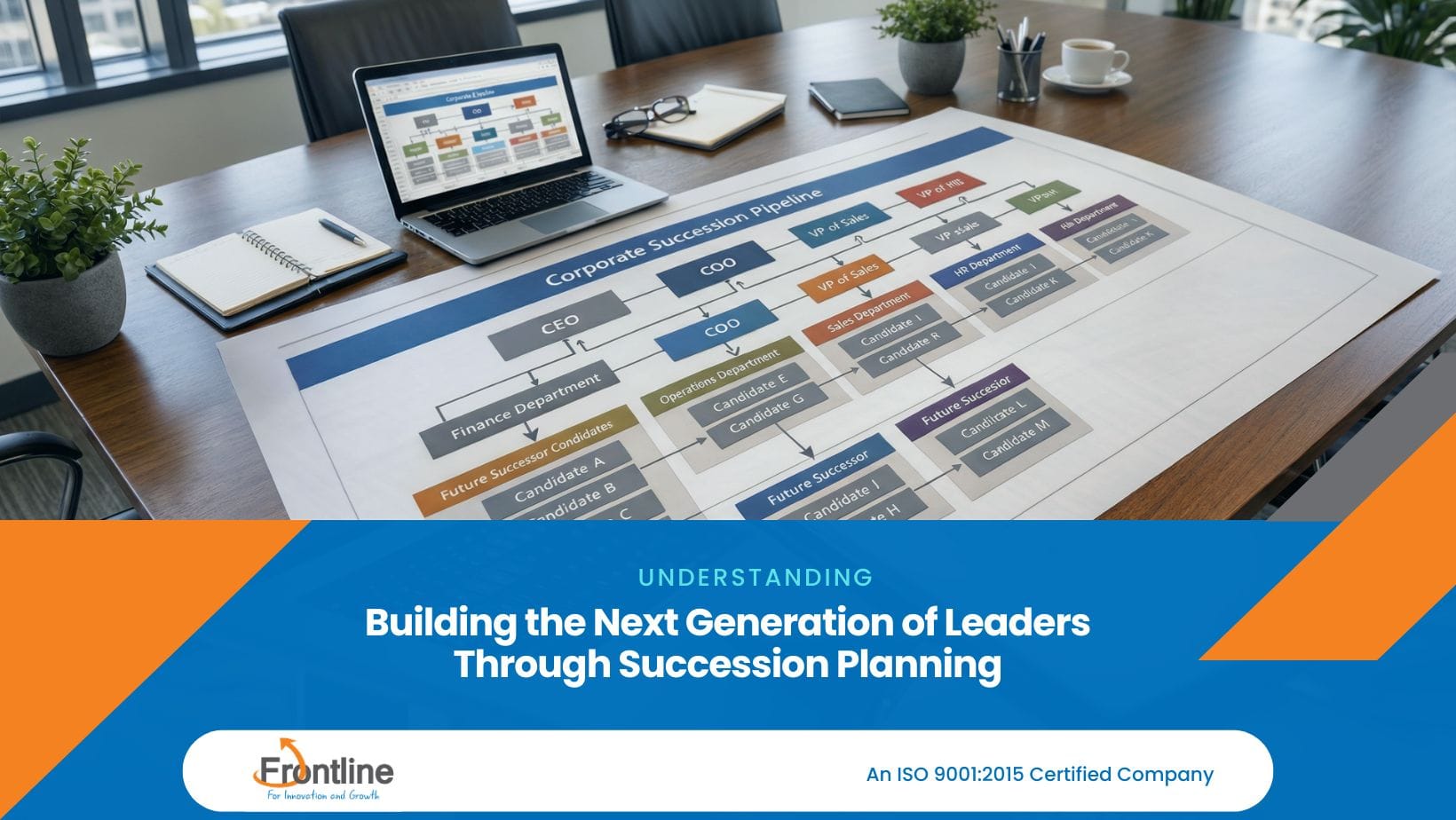
Succession planning is not simply about replacing people. It is about preparing people. It is the deliberate process of identifying and developing employees who have the potential to step into critical roles when the time comes, whether due to retirement, resignation, or growth.
As Dave Ulrich, widely regarded as one of the world’s most influential HR thinkers, puts it, leadership is not about the leader alone. It is about creating the capacity for others to lead. Succession planning is exactly that kind of investment.
Why Most Organisations Get It Wrong
Many organisations treat succession planning as an annual checkbox exercise. A list of names gets submitted to HR once a year, filed away, and forgotten until someone suddenly resigns and panic sets in.
This reactive approach is costly in ways that go beyond money. It affects team morale, client relationships, and the culture of the organisation.
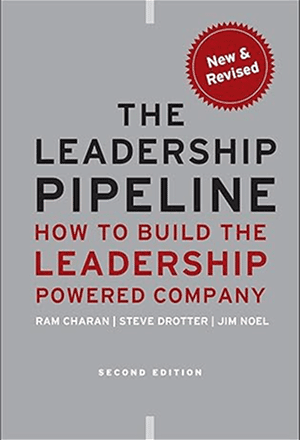
Ram Charan, co-author of the widely referenced book The Leadership Pipeline, argues that organisations fail at succession not because they lack talented people, but because they fail to develop those people for the right level of leadership. There is a difference between being good at doing work and being good at leading people who do work. Succession planning must build that bridge.
The Leadership Pipeline: A Framework Worth Knowing
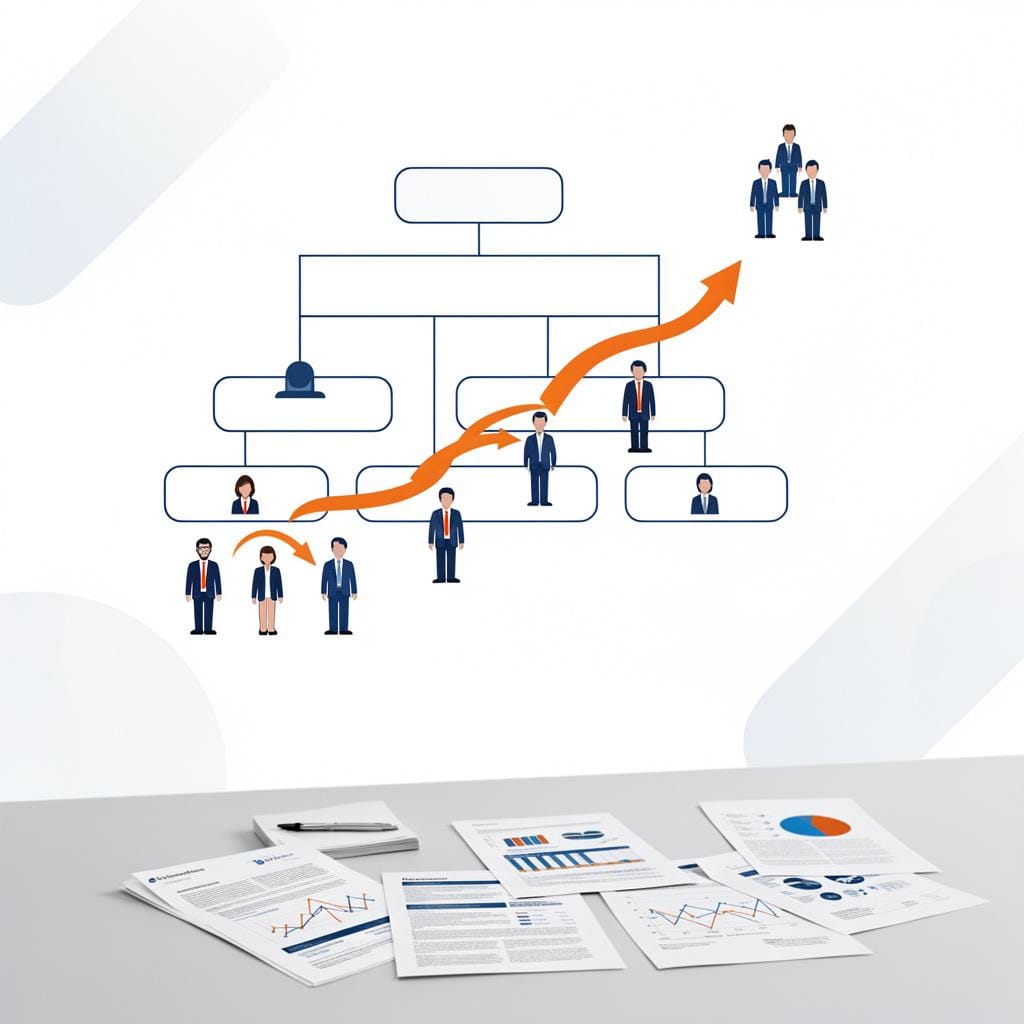
Charan’s Leadership Pipeline model describes the distinct transitions a person must make as they move from individual contributor to team leader to business leader. Each transition requires a shift not just in skills, but in values and how time is managed.
For example, a strong technical professional who becomes a team manager must stop defining their value through personal output and start defining it through the output of their team. This shift does not happen automatically. It must be coached, mentored, and supported.
Without this kind of structured development, we promote our best individual performers into leadership roles and then wonder why they struggle. The problem is never the person. The problem is the pipeline.
What the Research Tells Us
The Corporate Leadership Council, in one of its most cited studies on talent management, found that organisations with strong succession planning practices are significantly better at retaining high-potential employees. The reason is straightforward: when people see a clear path forward, they stay.
Marshall Goldsmith, an executive coach ranked among the top leadership thinkers in the world by Thinkers50, has written extensively about how leaders must be intentional about identifying and growing the next generation. In his work, he emphasises that what got a leader to the top is often not what will make them effective as they grow further, and the same logic applies to the people they are developing.
Identifying the Right People

One of the most important and most difficult parts of succession planning is identifying who has genuine leadership potential. This is where many organisations go wrong by confusing high performance with high potential.
A person can be an exceptional performer in their current role without being ready or suited for the next level. Claudio Fernandez-Araoz, a senior adviser at Egon Zehnder and author of It’s Not the How or the What but the Who, argues that the most reliable indicator of leadership potential is not past achievement but a set of qualities that include curiosity, insight, engagement, and determination.
We recommend using a simple 9-box grid as a starting point. This tool maps employees on two axes: their current performance and their future potential. It helps leadership teams have honest, structured conversations about who is ready now, who needs development, and who might be better suited to deepen expertise rather than move into management.
Building the Development Plan
Once potential successors are identified, the real work begins. Development must be intentional, not accidental.
Peter Drucker, arguably the father of modern management, believed that developing people is the most important task a manager has. He wrote that the organisation that does not develop its people will eventually find that it has neither leadership nor performance.
A strong development plan for a successor should include:
- Stretch assignments that push the individual into unfamiliar territory and build new skills
- Mentoring relationships with senior leaders who can share perspective and experience
- Cross-functional exposure so that the future leader understands the organisation beyond their own department
- Formal learning such as leadership programmes, workshops, or executive education
- Regular feedback conversations that are honest and forward-looking
None of this needs to be complicated. What it needs to be is consistent.
The Role of Senior Leadership
Succession planning cannot live only inside the HR department. It must be owned by the CEO and the senior leadership team.
Noel Tichy, a professor at the University of Michigan Ross School of Business and author of The Leadership Engine, makes a compelling case that the ultimate test of a leader is whether they produce other leaders. He describes organisations where senior leaders actively teach, coach, and sponsor the next generation as “teaching organisations,” and he argues that these are the organisations that sustain performance over time.
In our experience working with organisations across Nepal, the most successful succession efforts are those where the CEO personally champions the process, where leadership potential is discussed in every performance review, and where developing others is treated as a key responsibility of every manager.
Making It Part of the Culture
The best succession planning does not feel like a formal programme. It feels like the way things are done around here.
When leaders regularly ask “Who on your team could step into your role tomorrow?”, when high-potential employees are given visibility and opportunity, when mentoring is encouraged and rewarded, succession planning becomes embedded in the culture.
Liz Wiseman, author of Multipliers: How the Best Leaders Make Everyone Smarter, describes this kind of culture as one created by “multiplier leaders” who use their intelligence and energy to amplify the intelligence and energy of those around them. These leaders do not hoard knowledge or decisions. They share them. They grow others as they grow themselves.
This is the mindset that makes succession planning sustainable.
A Simple Starting Point for Your Organisation
If your organisation has not yet started a formal succession planning process, here is where we recommend beginning:
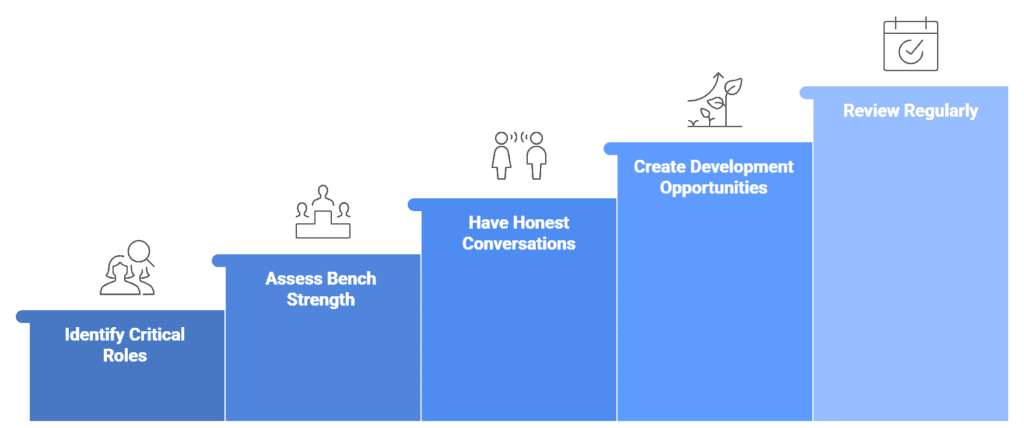
- Identify your critical roles: Not every role needs a successor. Focus first on the positions that would cause the most disruption if left vacant.
- Assess your current bench strength: For each critical role, ask who could step in today and who could be ready within two to three years.
- Have honest conversations: Succession planning requires courage. It means having real conversations with people about their potential, their aspirations, and the gaps they need to close.
- Create development opportunities: Put your identified successors into situations where they can grow. Give them responsibility before they feel fully ready.
- Review regularly: Succession planning is not a one-time exercise. It must be revisited as the organisation changes and as people grow.
The Long View
Building the next generation of leaders is one of the most generous things an organisation can do, for its people, for its clients, and for the communities it serves.
In Nepal, where many organisations are family-run or founder-led, the challenge of succession is especially personal. But it is also especially important. The organisations that will thrive in the next decade are not necessarily those with the best strategy today. They are the ones building the leadership capacity to execute strategy tomorrow.
Succession planning is not about replacement. It is about legacy.
50 views