
Legal Compliance in Organizations
Running a business is hard enough without legal surprises getting in the way. Labor disputes, payroll errors, missed regulatory filings: these are the kinds of problems that quietly build up when compliance is not reviewed regularly. Regular audits are one of the simplest and most overlooked ways to keep an organization legally sound, not because the law demands it, but because it genuinely protects your people and your reputation. This article walks through why audits work, what they should cover, and what leading HR thinkers say about making compliance a natural part of organizational life.
Table of Contents
What Is a Legal Compliance Audit?

A legal compliance audit is a structured review of an organization’s policies, practices, and processes to ensure they align with applicable laws and regulations. This includes labor laws, tax obligations, health and safety standards, data protection requirements, and employment regulations.
An audit is not about finding fault. It is about finding gaps before regulators, courts, or employees do. Think of it as a health check for your organization’s legal standing.
Why Regular Audits Matter More Than You Think
Many organizations only look at compliance after something goes wrong. By then, the damage is already done. Regular audits shift this approach from reactive to proactive.
Dave Ulrich, widely regarded as one of the most influential HR thinkers of our time and a professor at the Ross School of Business, has long emphasized that HR functions must move beyond administrative tasks to become strategic partners. A core part of that strategy is ensuring the organization operates within legal and ethical boundaries. Ulrich’s HR competency model consistently places “compliance and governance” as a foundational pillar, not an afterthought.
When we conduct regular audits, we are essentially asking: Are we doing what we said we would do, and does it align with what the law requires? That question, asked consistently, prevents costly legal disputes, protects employees, and builds organizational trust.
The Link Between Audits and Organizational Trust

According to the SHRM (Society for Human Resource Management), organizations with structured compliance programs report stronger employee trust and lower turnover. When employees see that their organization takes legal obligations seriously, they feel safer and more valued.
This is especially important in the Nepali context, where labor law compliance under the Labour Act 2074 and the Social Security Act 2074 directly affects employee benefits, safety, and welfare. Regular audits ensure these obligations are being met consistently, not just when inspections are expected.
Key Areas That Regular Audits Cover
When we talk about legal compliance audits in the organizational context, several core areas deserve attention:
1. Employment Contracts and Documentation Every employee should have a signed, legally compliant contract. Audits verify that contracts are current, accurate, and meet legal requirements. Missing or outdated contracts are among the most common compliance gaps we see.
2. Payroll and Benefits Compliance Payroll errors, missed provident fund contributions, or incorrect gratuity calculations can lead to serious legal consequences. Regular audits of payroll processes catch these issues early.
3. Health and Safety Standards Under Nepal’s Occupational Safety and Health framework, employers are required to provide safe working conditions. Audits assess whether safety protocols are in place, documented, and practiced.
4. Working Hours and Leave Management Overtime policies, leave entitlements, and rest periods are all regulated. Non-compliance in this area is common and often discovered too late. Audits flag these discrepancies before they escalate.
5. Data Privacy and Confidentiality As organizations digitize their operations, protecting employee and client data becomes a compliance requirement. Audits review how data is stored, accessed, and protected.
What Research and Experts Tell Us About Compliance Culture
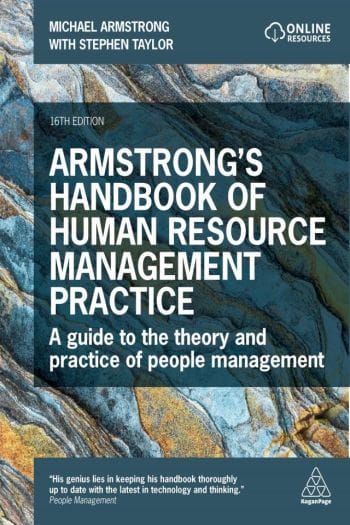
Michael Armstrong, author of the widely used Armstrong’s Handbook of Human Resource Management Practice, argues that a strong compliance culture is not built through policies alone. It requires consistent action, leadership commitment, and regular review mechanisms. Audits are the review mechanism that keeps everything honest.
Similarly, research published by Deloitte’s Global Human Capital Trends has repeatedly shown that organizations with clear governance structures and regular internal reviews outperform those without. The findings consistently point to a direct relationship between compliance discipline and organizational resilience.
We have seen this reflected in our own work. Organizations that treat audits as routine maintenance, rather than emergency responses, build a culture of accountability that runs through every level of the team.
The Role of HR in Driving Compliance Audits
HR professionals sit at the center of compliance. They manage employment documentation, payroll processes, performance policies, and employee communications. This makes HR the natural owner of the compliance audit function within most organizations.
Liz Ryan, a former Fortune 500 HR leader and one of LinkedIn’s most followed voices on workplace culture, has written extensively about the need for HR to be both people-centered and legally informed. She argues that the best HR teams are those that understand compliance not as a bureaucratic burden but as a form of employee protection. Regular audits are how HR teams live out that belief in practice.
When HR leads the audit process, it creates a more human-centered approach. The goal is not to penalize departments but to support them in meeting their obligations. This collaborative spirit makes audits far more effective.
How Frequently Should Organizations Conduct Audits?
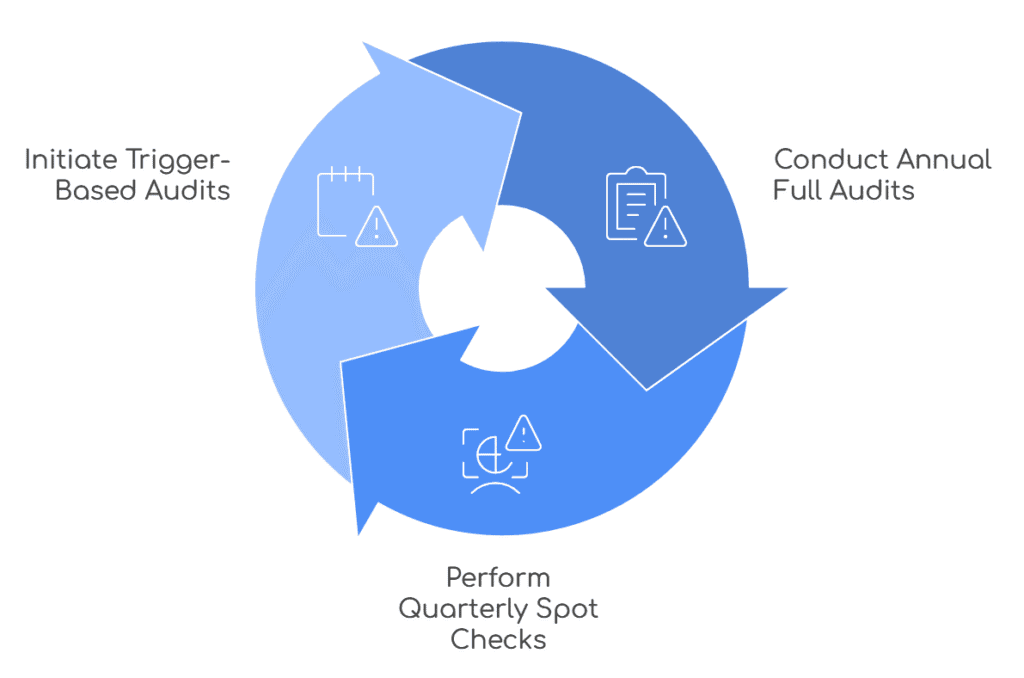
There is no single answer, but best practice suggests the following rhythm:
- Annual full compliance audits covering all major areas of employment law and organizational policy
- Quarterly spot checks on high-risk areas such as payroll accuracy and leave records
- Trigger-based audits when there are significant changes, such as new laws, restructuring, or rapid headcount growth
For Nepali organizations, annual audits aligned with the fiscal year (Shrawan to Ashadh) work well because they coincide with renewal periods for registrations, tax filings, and employee benefit reviews.
Steps to Conduct an Effective Compliance Audit
If your organization is ready to build a more structured audit process, here is a practical starting framework:
Step 1: Define the Scope Decide which areas you are auditing and what laws or policies apply. This gives the audit focus and prevents it from becoming overwhelming.
Step 2: Gather Documentation Collect employment contracts, payroll records, leave data, safety inspection reports, and any previous audit findings. Good documentation is the foundation of a credible audit.
Step 3: Review Against Legal Requirements Compare your current practices against the relevant laws and internal policies. Identify gaps, errors, and areas of risk.
Step 4: Engage the Right People Audits are most effective when they involve input from HR, finance, legal advisors, and department managers. Compliance is a shared responsibility.
Step 5: Report and Act The audit report is only valuable if it leads to action. Prioritize findings by risk level, assign owners, and set realistic timelines for resolution.
Step 6: Follow Up A follow-up review three to six months after the audit ensures that corrective actions were actually implemented. This is where many organizations fall short, and it is what separates a good audit process from a great one.
Common Compliance Mistakes That Audits Prevent
Through our experience working with organizations across Nepal, we have identified recurring compliance gaps that regular audits consistently uncover:
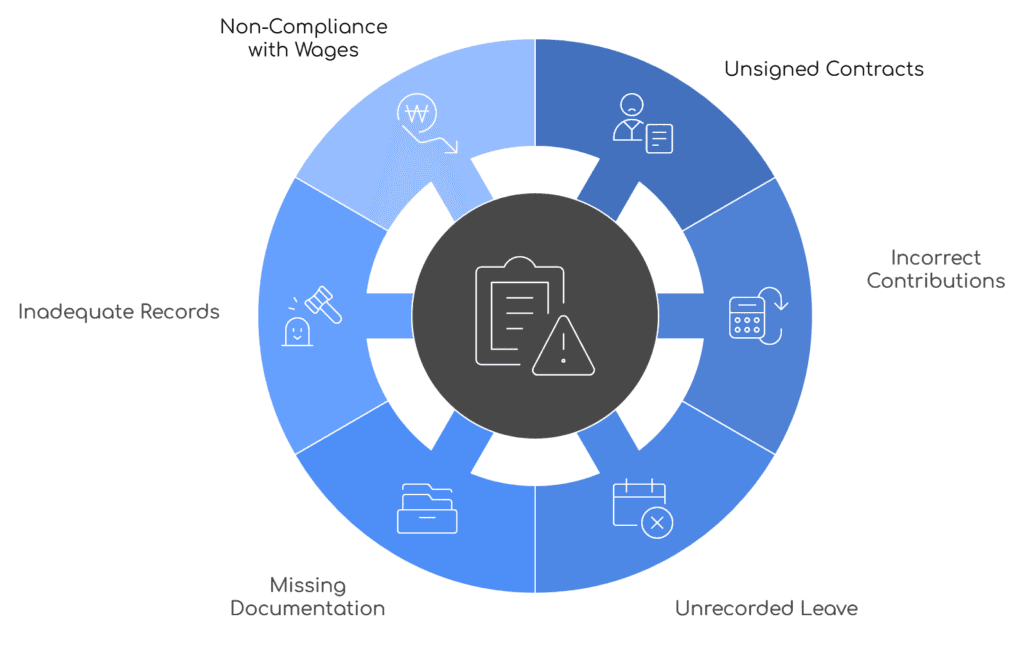
- Unsigned or expired employment contracts
- Incorrect calculation of gratuity and provident fund contributions
- Unrecorded overtime or compensatory leave
- Missing health and safety documentation
- Inadequate records of disciplinary proceedings
- Non-compliance with minimum wage updates
Each of these seems small in isolation. Together, they represent significant legal exposure. Regular audits make sure these gaps are closed before they become disputes.
Building a Compliance-First Culture Through Consistent Auditing
The goal of regular audits is not just legal protection. It is cultural transformation. When audits are normalized, compliance becomes part of how an organization thinks and operates, not just something it does under pressure.
Josh Bersin, one of the most respected HR industry analysts globally, has noted in his research that high-performing organizations treat compliance as a strategic investment rather than a cost. His findings show that organizations with mature compliance frameworks spend less time resolving disputes and more time focusing on growth and people development.
We agree with this view entirely. When your organization knows it is legally sound, leadership can focus on strategy, innovation, and people. That is the real return on a regular audit process.
Conclusion
Regular audits are one of the most practical tools available to organizations that want to grow sustainably and ethically. They protect employees, reduce legal risk, build trust, and create a culture of accountability. For organizations operating in Nepal, where labor laws are evolving and regulatory oversight is increasing, audits are not optional. They are essential.
We encourage every HR professional, business leader, and compliance officer to build a structured audit calendar into their annual planning. Start with what matters most, build your documentation, and make compliance a habit rather than a crisis response
64 views