
Table of Contents
Introduction to Assessment for Hiring
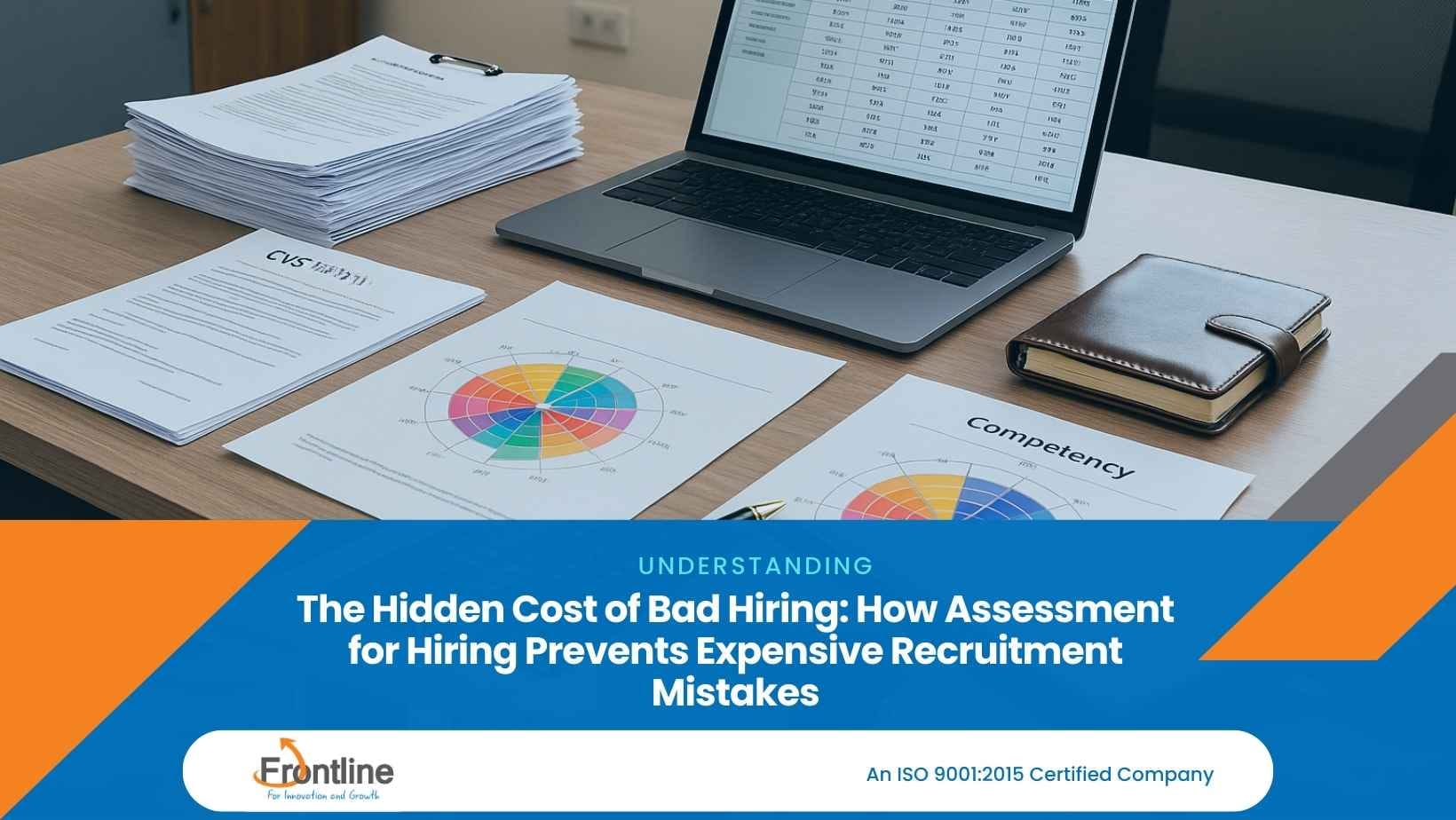
Hiring the wrong person is one of the most quietly damaging things an organization can do to itself. The consequences rarely show up all at once. They creep in slowly through missed deadlines, team friction, customer complaints, and a gradual erosion of company culture. By the time a business realizes the damage, the cost is already far greater than most leaders anticipated.
At our organization, we have worked with teams across industries and consistently seen one truth hold firm: a structured assessment for hiring is not an optional luxury. It is a foundational business decision.
Why Bad Hiring Is More Harmful Than It Looks
Most hiring managers focus on whether a candidate seems qualified on paper. Degrees, job titles, years of experience. These things matter, but they tell only a fraction of the story.
Peter Cappelli, a professor at the Wharton School of Business and one of the most respected voices in talent management, has long argued that organizations routinely make poor hiring decisions because they rely too heavily on gut feeling and surface-level credentials. In his book Why Good People Can’t Get Jobs, he highlights how companies often misidentify what they actually need from a hire, leading to a mismatch that hurts both the employer and the employee.
When a hire goes wrong, the impact spreads across multiple layers of the business:
- Productivity drops as managers spend time correcting errors, re-training, or covering gaps
- Team morale suffers when other employees have to compensate for an underperforming colleague
- Client relationships weaken if the wrong person is client-facing
- Institutional knowledge is disrupted when the cycle of hiring and rehiring continues
The visible cost is rehiring. The invisible cost is everything that happened in between.
The Research Behind Hiring Mistakes
Dr. John Sullivan, a well-known HR thought leader and professor at San Francisco State University, has written extensively about the true impact of hiring failures. He points out that the cost of a bad hire is almost always underestimated because organizations only count the direct expenses. They rarely account for the time lost by HR teams, the productivity hit on the team, the management hours spent managing a struggling employee, and the cultural damage left behind.
The Society for Human Resource Management (SHRM) has consistently reported through its research that replacing an employee can cost anywhere from 50% to 200% of that employee’s annual salary. For organizations in Nepal, where talent pools in specialized fields are still developing, the disruption of a bad hire can be even more pronounced.
What Makes a Hiring Assessment So Valuable
A well-designed hiring assessment does something that a resume and interview simply cannot. It reveals how a candidate actually thinks, behaves, and performs under realistic conditions.
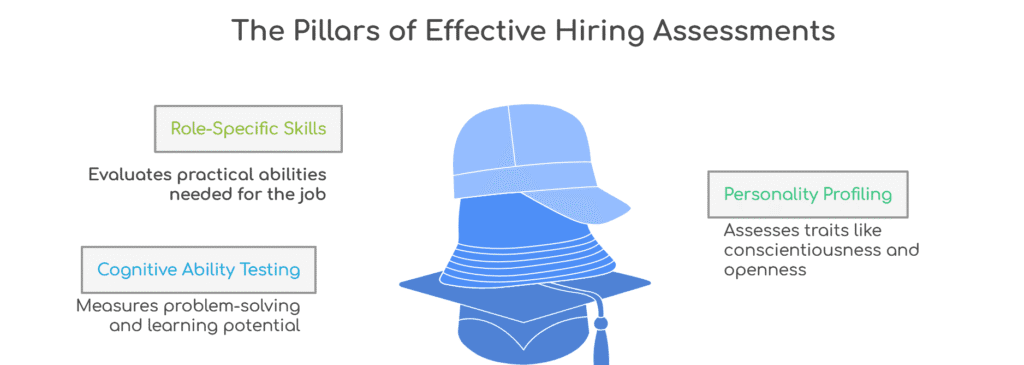
1. Cognitive Ability Testing
Frank Schmidt and John Hunter, whose landmark meta-analysis published in Psychological Bulletin is considered one of the most comprehensive studies on hiring validity, found that general cognitive ability is one of the strongest predictors of job performance across almost every role and industry. A structured cognitive assessment gives organizations a reliable, objective signal of a candidate’s potential to learn, adapt, and solve problems.
2. Personality and Behavioral Profiling
The Five Factor Model of personality, widely used in organizational psychology, helps hiring teams understand traits like conscientiousness, emotional stability, and openness to experience. According to research by Hogan Assessments, personality assessments predict job performance, leadership potential, and long-term retention far more accurately than interviews alone.
3. Role-Specific Skill Evaluation
Beyond personality and cognition, candidates need to be evaluated on the actual skills required for the role. A skills-based assessment removes bias from the process and ensures that hiring decisions are grounded in demonstrated ability rather than assumed competence.
The Interview Alone Is Not Enough
We respect the value of a well-conducted interview. However, research has consistently shown that unstructured interviews are among the weakest predictors of job performance.
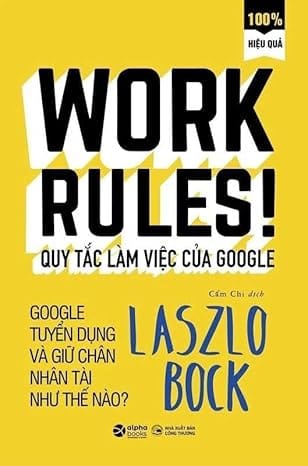
Laszlo Bock, former Senior Vice President of People Operations at Google and author of Work Rules!, famously wrote that Google’s internal data showed that unstructured interviews had almost no predictive validity. This led Google to significantly restructure its hiring process with structured behavioral interviews and work sample tests. The lesson for all organizations is clear: relying on conversation alone is not enough.
Structured assessments reduce this risk significantly. They bring consistency, fairness, and objectivity to a process that is otherwise vulnerable to unconscious bias and first impressions.
How Assessments Protect Company Culture
Culture is one of the most fragile assets a company has. It takes years to build and can be disrupted by a single hire who does not align with the values, communication style, or working norms of the team.
Organizational psychologist Benjamin Schneider developed the Attraction-Selection-Attrition (ASA) framework, which explains how organizations naturally gravitate toward people who are similar in personality and values. When this alignment is disrupted by a poor hire, the organization experiences internal friction that can ripple outward.
A values-based or culture-fit component in the assessment process helps ensure that new hires are not just technically capable but also likely to thrive within the existing team environment. This is especially important in Nepali workplaces, where interpersonal trust and team cohesion often drive performance as much as individual skill.
Making Assessments Fair and Bias-Free
One concern we often hear from organizations is whether assessments might introduce bias against certain candidates. This is a valid and important question.
The answer lies in validation. A properly validated assessment is tested across diverse groups to ensure that it measures what it claims to measure and does not systematically disadvantage any demographic. Organizations like The British Psychological Society provide standards and guidelines for psychological testing in occupational settings that help ensure assessments are used ethically and fairly.
When assessments are designed with rigor and applied consistently, they actually reduce bias rather than introduce it. They shift evaluation away from subjective impressions and toward measurable, comparable data.
Assessment Is an Investment, Not an Expense
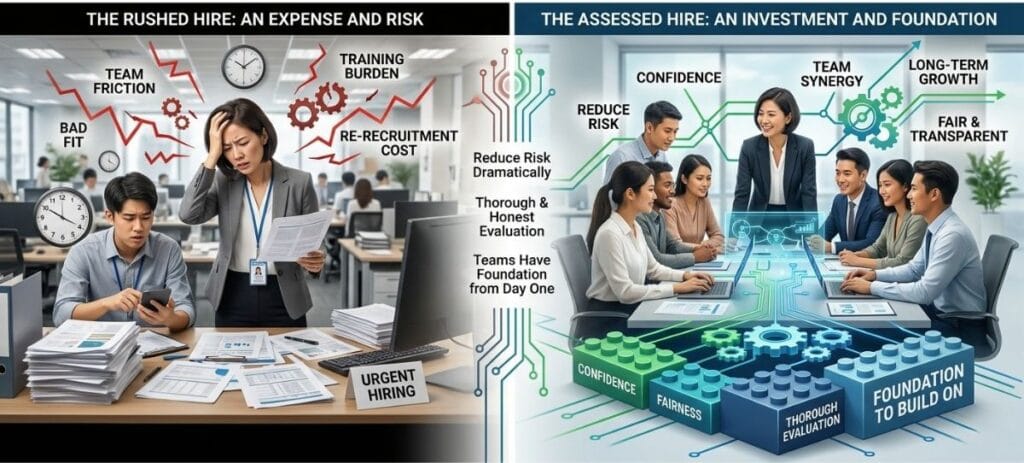
There is sometimes hesitation around adding an assessment step to the hiring process. It can feel like an additional layer that slows things down or adds unnecessary friction.
But consider the alternative. A rushed hire, made without proper evaluation, can set an organization back significantly in terms of time, team dynamics, and the energy required to manage or exit an underperforming employee.
Hiring assessments reduce that risk dramatically. They give organizations confidence that the person they are bringing in has been evaluated thoroughly and honestly. They give candidates a fair and transparent process. And they give teams a foundation to build on from day one.
What a Good Hiring Assessment Process Looks Like
For organizations looking to implement or improve their assessment process, we recommend the following approach:
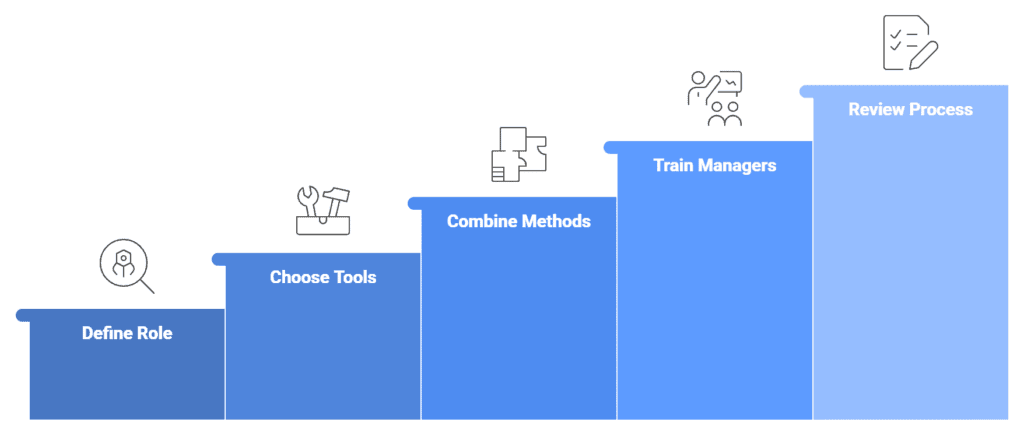
- Define the role clearly before building the assessment. Know what success looks like in the first 90 days.
- Choose validated tools that have been tested for reliability and fairness in professional settings.
- Combine multiple methods including cognitive tests, personality profiling, and skills-based tasks.
- Train your hiring managers to interpret results in context, not in isolation.
- Review your process regularly to ensure it continues to reflect the evolving needs of your organization.
The Bottom Line
Bad hiring is expensive. It is disruptive. And much of it is preventable.
The organizations that invest in structured, research-backed hiring assessments consistently build stronger teams, retain talent longer, and make faster, more confident decisions. They avoid the quiet, compounding damage that a poor hire leaves behind.
We believe that every organization, regardless of its size or industry, deserves a hiring process that is fair, rigorous, and grounded in evidence. Assessment for hiring is not about finding the perfect candidate. It is about making the best possible decision with the clearest possible information.
That is the standard we hold ourselves to. And it is the standard we help our clients achieve.
70 views