
Table of Contents
Digital HR Transformation
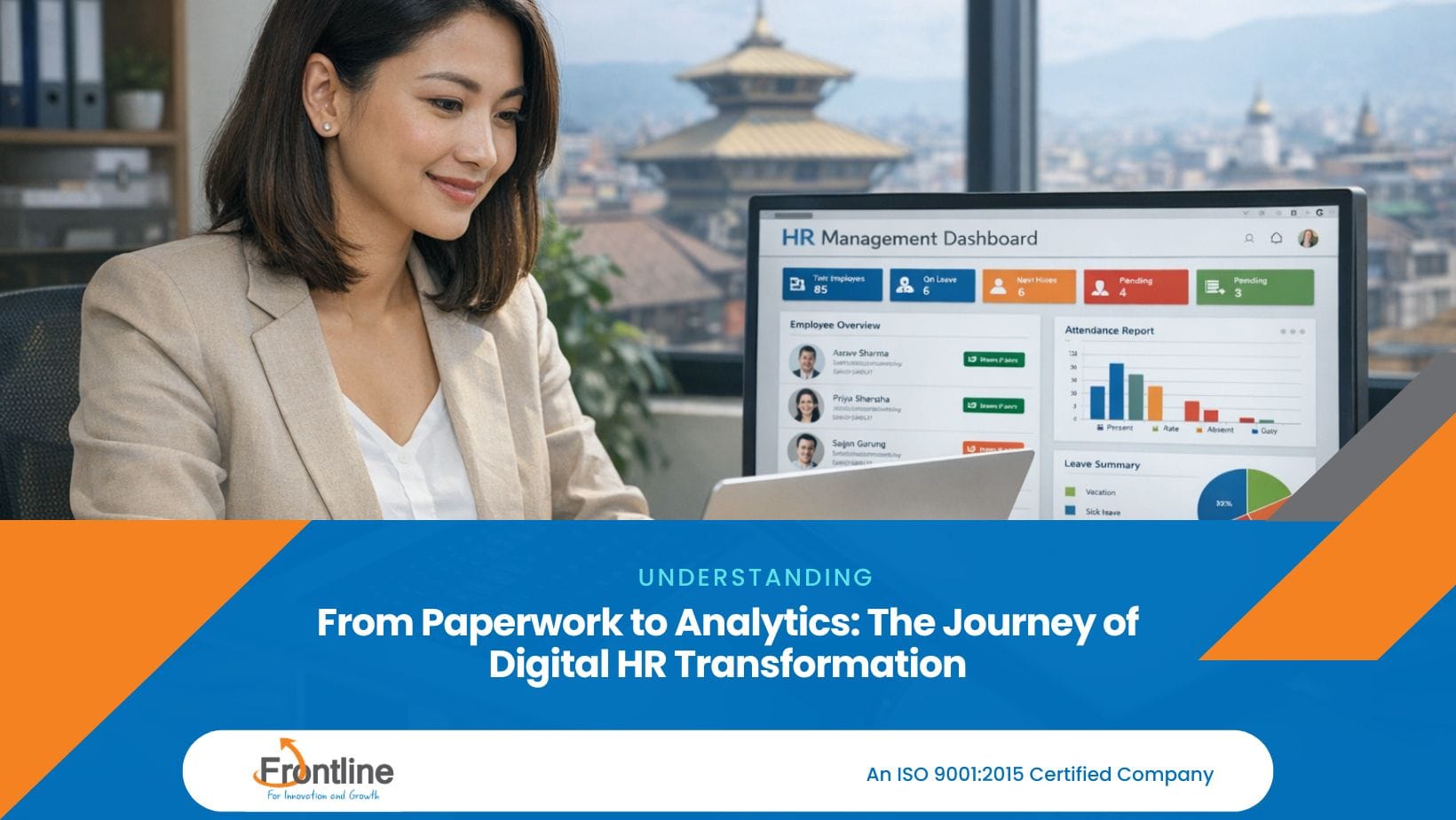
For decades, Human Resources has been the department buried under filing cabinets, printed forms, and manual attendance registers. If you have ever worked in an HR team in Nepal, you know exactly what this looks like: stacks of leave applications, handwritten payroll sheets, and appraisal forms that take weeks to process. But something has been shifting, and it is shifting fast.
Today, HR is no longer just about managing people. It is about understanding them through data, supporting them with smart tools, and building workplaces where both the organization and its people can genuinely grow. This is the heart of digital HR transformation, and we believe every Nepalese organization, from startups in Kathmandu to enterprises across the country, needs to understand what this journey looks like.
Why the Old Way of Doing HR No Longer Works

The traditional HR model was built for a different era. It was reactive, paper-heavy, and deeply administrative. HR professionals spent most of their time on tasks that had little strategic value, things like chasing signatures, manually calculating overtime, or updating employee records one by one.
Dave Ulrich, widely regarded as the father of modern HR, argued years ago that HR must evolve from being an administrative function to a strategic business partner. His landmark work, “Human Resource Champions,” challenged HR professionals to stop thinking of themselves as paper processors and start thinking like business leaders.
That challenge is more relevant today than it ever was.
When HR is stuck in paperwork, it cannot focus on what truly matters: hiring the right people, retaining top talent, building a healthy culture, and helping leadership make smarter workforce decisions.
Digital transformation is not about replacing HR professionals. It is about freeing them to do their best work.
What Digital HR Transformation Actually Means
Digital HR transformation is the process of using technology to redesign how HR functions work, from recruitment and onboarding to performance management, learning, and workforce planning.
But here is what many organizations get wrong. They think buying new software is the same as transformation. It is not. Transformation means changing how you think about people processes, not just the tools you use.
Josh Bersin, one of the most respected HR industry analysts in the world, describes this well. He has consistently pointed out that the most successful HR transformations happen when organizations combine the right technology with a genuine cultural shift in how they value and develop their people.
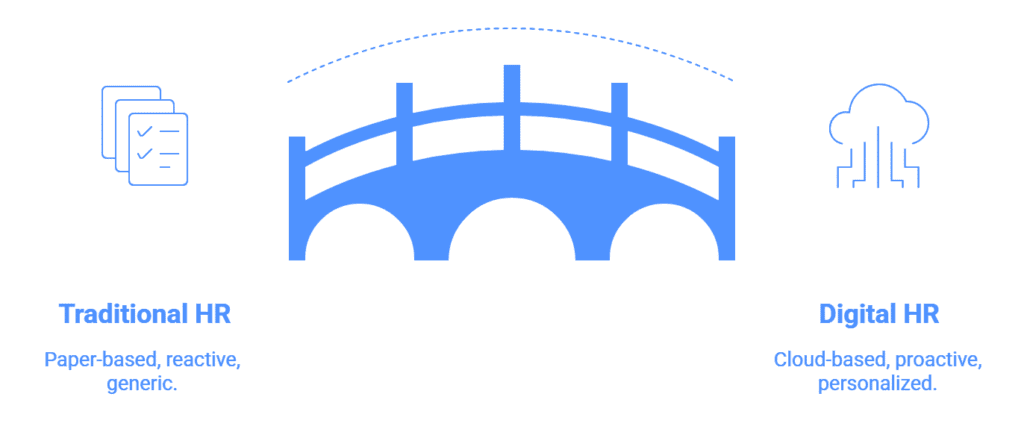
In practical terms, digital HR transformation means moving from:
- Paper-based records to cloud-based HR information systems
- Gut-feel hiring to data-driven recruitment
- Annual appraisals to continuous performance feedback
- Reactive workforce planning to predictive analytics
- Generic training programs to personalized learning journeys
Each of these shifts represents a meaningful change in how HR operates and how much value it delivers to the organization.
The Role of People Analytics: Turning Data Into Decisions
Perhaps the most exciting part of digital HR transformation is the rise of people analytics, the practice of using workforce data to make better decisions.
For a long time, decisions in HR were based on instinct and experience. Now, organizations can look at data to understand why employees leave, which teams are most engaged, what factors predict high performance, and how to build more effective leadership pipelines.
Laszlo Bock, former Senior Vice President of People Operations at Google and author of “Work Rules!”, was one of the earliest champions of using data inside HR. His work at Google showed that when you apply rigorous analysis to people decisions, including hiring, team structure, and management practices, the results are transformative. His research helped dismantle many long-held HR assumptions, including the idea that top universities always produce the best employees.
For Nepalese organizations, people analytics does not have to mean complex dashboards and massive data teams. It can start simply. Tracking employee turnover patterns, monitoring training completion rates, or analyzing survey results from your teams are all forms of people analytics. The key is to start asking questions and then using data to find answers.
From Onboarding to Offboarding: Technology Touches Every Stage
One of the clearest signs of digital HR maturity is when technology supports the entire employee lifecycle, not just one or two touchpoints.
Recruitment has been one of the first areas to digitize. Applicant tracking systems, video interviews, and AI-assisted screening have made it faster and more consistent to find the right candidates. In Nepal, platforms and tools are becoming more accessible, and organizations that adopt them early have a clear advantage in attracting talent.
Onboarding is another area where digital tools make a significant difference. Research from SHRM (Society for Human Resource Management) consistently shows that structured onboarding improves new hire retention and productivity. Digital onboarding portals, e-signature tools, and automated task checklists make the process smoother and more welcoming for new employees.
Performance management has also changed dramatically. The old system of one annual review is increasingly seen as insufficient. Organizations are moving to continuous check-ins, real-time feedback tools, and goal-tracking platforms that keep managers and employees aligned throughout the year. This shift has been championed by thought leaders like Marcus Buckingham, whose research on strengths-based management has influenced how organizations think about performance conversations.
Learning and development is where digital transformation creates perhaps the greatest long-term value. When employees have access to personalized, on-demand learning, they grow faster and feel more valued. Platforms that recommend learning content based on an employee’s role, goals, and skill gaps are becoming standard in progressive organizations worldwide.
The Human Side of Digital Transformation
It would be easy to read all of this and think that digital HR transformation is mainly about technology. But we believe the most important ingredient is people, specifically, the mindset of HR leaders and the culture of the organization.
Peter Cappelli, a professor at the Wharton School and a well-known voice in HR research, has written extensively about how organizations often invest in technology without investing equally in the capability of their people to use it. Technology without adoption is just expensive software.
For Nepalese HR teams, this is a real consideration. The shift from manual processes to digital ones requires training, patience, and strong leadership commitment. Employees and managers need to understand why the change is happening, not just how to use the new tools.
Communication matters enormously during transformation. When HR leaders are transparent about what is changing and why, they build trust. When they involve employees in the process, they get better outcomes. This is not just good practice. It is what the research consistently tells us.
Building an Analytics-First HR Culture
Moving from paperwork to analytics is not a one-time project. It is a cultural shift that takes time to embed.
An analytics-first HR culture is one where decisions are routinely informed by data, where HR teams regularly ask “what does the data tell us?” before making recommendations, and where workforce insights are shared with leadership as a normal part of business planning.
Getting there requires a few foundational steps:
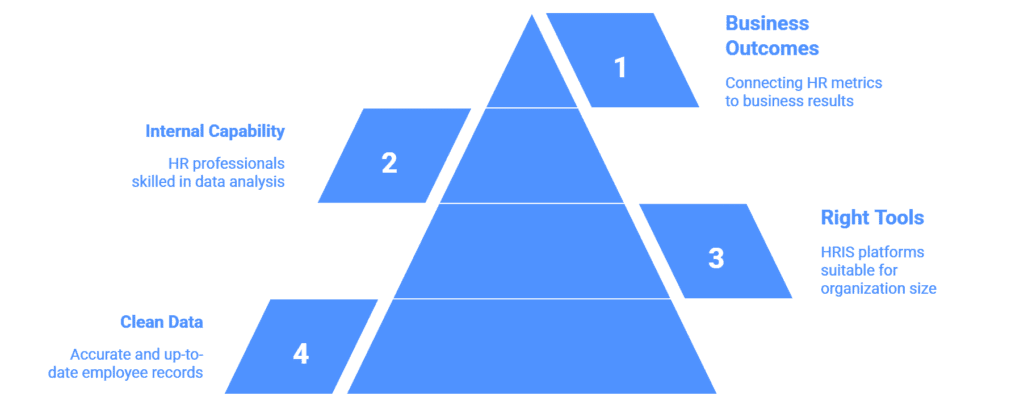
Start with clean data. Analytics are only as good as the data behind them. Organizations need to invest in keeping employee records accurate, complete, and up to date.
Choose the right tools for your size and stage. Not every organization needs enterprise-level software. Smaller organizations can start with simpler HRIS platforms and build from there.
Develop internal capability. HR professionals who understand data, even at a basic level, are far more effective in a digital environment. Investing in learning is just as important as investing in software.
Connect HR metrics to business outcomes. The most powerful analytics are the ones that connect people data to results, things like how employee engagement scores relate to customer satisfaction, or how learning investment relates to promotion rates.
The Path Forward for HR in Nepal
Nepal’s workforce is young, growing, and increasingly exposed to global work standards through remote work, diaspora networks, and international organizations operating in the country. The expectation of employees, especially younger professionals, is rising. They expect fair, transparent, and responsive HR practices.
Organizations that embrace digital HR transformation now will be better positioned to attract this talent, retain them, and build the kind of workplace culture that drives real results.
The journey from paperwork to analytics is not about discarding the human in Human Resources. It is about giving HR professionals the tools, time, and insight to do what they were always meant to do: champion people, build great teams, and help organizations thrive.
We are at a turning point. The organizations that recognize it and act will lead. Those that wait will find the gap growing harder to close.
175 views