
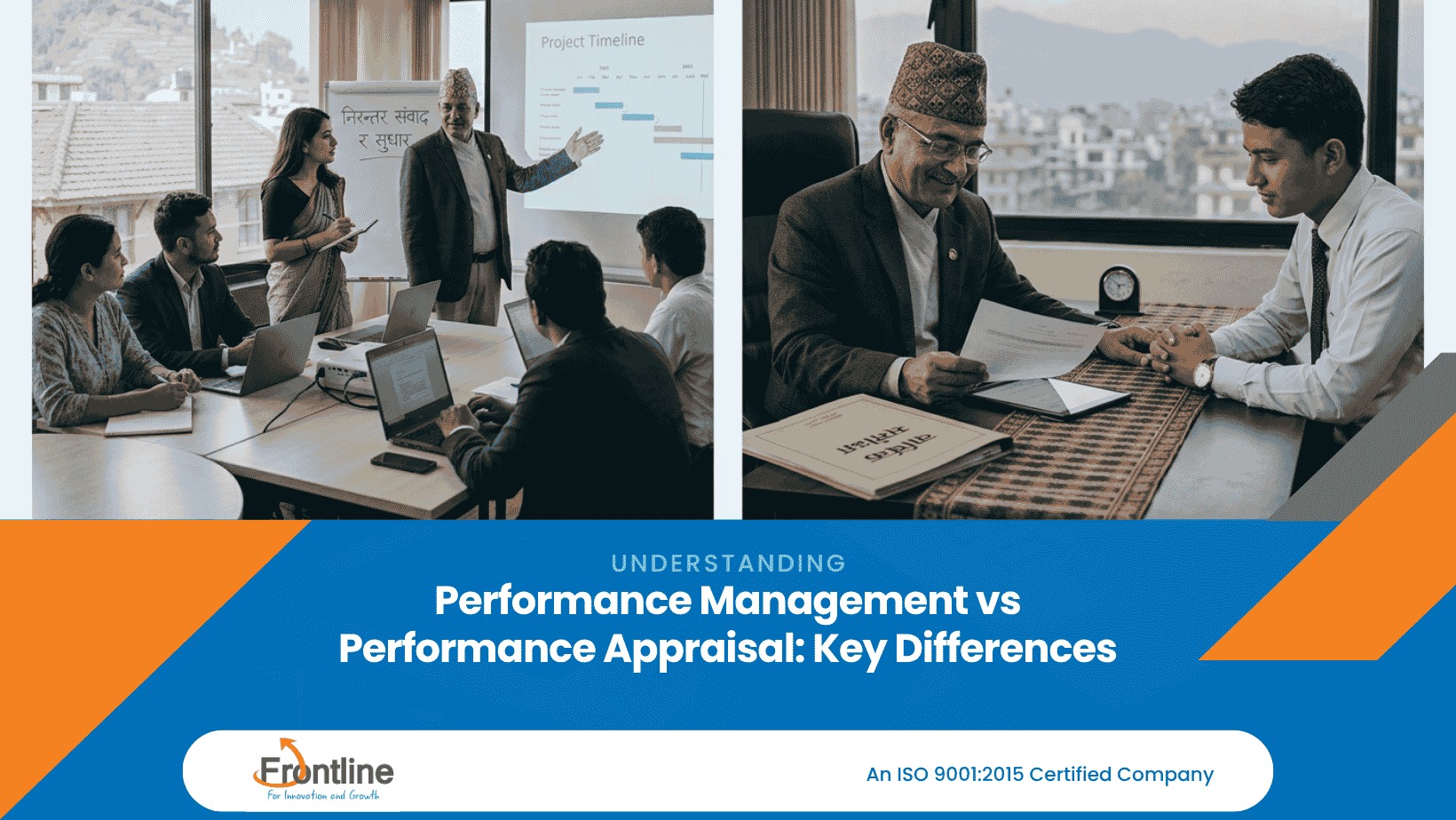
Many organizations use the terms “performance management” and “performance appraisal” as if they mean the same thing. In practice, they serve very different purposes, and understanding the distinction between them can genuinely transform how a company grows its people and achieves its goals.
This blog breaks down what each concept truly means, how they differ, and why getting clarity on both is a great step toward building a stronger, more engaged workforce.
What Is Performance Management?
Performance management is a continuous, year-round process that helps align the work of individual employees with the broader goals of the organization. It is not a one-time meeting or a form that gets filled out at the end of the year. Rather, it is an ongoing conversation between managers and their teams.
At its core, performance management includes:
- Setting clear goals and expectations at the beginning of a performance cycle
- Providing regular feedback and coaching throughout the year
- Tracking progress against defined Key Performance Indicators (KPIs)
- Identifying development needs and supporting employee growth
- Recognizing achievements and addressing areas for improvement in real time
A well-designed performance management system creates a culture of accountability, openness, and continuous learning. Employees feel supported and know exactly where they stand and what they are working toward.
What Is Performance Appraisal?
Performance appraisal, on the other hand, is a specific event within the broader performance management process. It is a formal review, typically conducted once or twice a year, where a manager evaluates an employee’s performance over a defined period.
During a performance appraisal, organizations usually:
- Review whether the employee met their previously set goals
- Rate performance against a set of competencies or criteria
- Document achievements and areas for development
- Discuss career progression and future expectations
- Make decisions related to promotions, salary adjustments, or training needs
Performance appraisals are structured and documented. They provide a clear snapshot of how an employee has performed during a specific period and serve as an official record for HR decision-making.
Key Differences at a Glance
| Aspect | Performance Management | Performance Appraisal |
|---|---|---|
| Nature | Ongoing and continuous | Periodic (usually annual or bi-annual) |
| Purpose | Improve and guide performance in real time | Evaluate and document past performance |
| Focus | Future growth and goal alignment | Past performance and outcomes |
| Frequency | Happens throughout the year | Happens at fixed intervals |
| Approach | Collaborative and coaching-driven | Formal and evaluative |
| Tools Used | Check-ins, KPIs, 360-degree feedback, development plans | Rating scales, appraisal forms, structured interviews |
| Ownership | Shared between manager and employee | Primarily led by the manager or HR |
| Outcome | Improved engagement, motivation, and performance | Decisions on pay, promotion, and training |
Why Both Matter
It is tempting to think that running annual appraisals is enough to keep performance on track. While appraisals are certainly valuable, they work best when they are part of a larger system that supports employees throughout the year.
Here is why having both in place makes a real difference:
1. Appraisals Without Management Can Feel Like a Surprise
When employees only hear formal feedback once a year, they may be caught off guard by what their manager says. Regular check-ins and ongoing conversations help ensure that nothing in the annual appraisal comes as a shock. Everyone is already on the same page.
2. Management Without Appraisals Lacks Accountability
On the other side, having frequent conversations without a formal structure to document and assess outcomes can make it difficult to track long-term growth or make fair decisions about promotions and compensation. Appraisals bring that structure.
3. Together, They Create a Complete Picture
When performance management and performance appraisal work together, organizations get both the depth and the breadth they need. Employees receive guidance all year long and then have a clear, fair formal review to close the cycle.
Common Approaches Used in Practice
Organizations that take performance seriously often combine several tools and frameworks to make the process thorough and meaningful.
360-Degree Feedback is one of the most comprehensive approaches. Rather than relying only on a manager’s perspective, it gathers input from peers, direct reports, and even the employee themselves. This gives a well-rounded view of how someone is performing and how they are experienced by the people around them.
Management by Objectives (MBO) focuses on setting specific, measurable goals collaboratively. Managers and employees agree on what success looks like at the start of a cycle, and progress is reviewed regularly. This keeps both parties aligned and invested in the outcomes.
KPI Tracking brings data into the process. By measuring progress against clear indicators, organizations can make informed decisions rather than relying on gut feeling or memory.
Shifting the Mindset: From Evaluation to Development
One of the biggest shifts happening in forward-thinking organizations is moving away from seeing performance reviews as purely evaluative toward seeing them as opportunities for development. When managers approach these conversations with genuine curiosity and a desire to help their teams grow, the entire experience changes.
Employees who feel that their organization is invested in their development are more motivated, more loyal, and more productive. They are also more likely to bring their best to work every day because they understand how their contribution connects to something bigger.
This is where the true value of combining performance management with structured appraisals becomes clear. It is not just about assessing where someone is. It is about helping them get to where they want to go, in a way that also serves the organization’s goals.
What Makes a Performance System Truly Effective?
Regardless of the framework an organization chooses, a few principles tend to make the difference between a system that works and one that just exists on paper.
Clarity is foundational. Employees need to know what is expected of them. Vague goals lead to confusion, and confusion leads to disengagement.
Regularity keeps things fresh and actionable. Feedback given in the moment is far more useful than feedback shared months after an event occurred.
Fairness builds trust. When employees believe that the process is consistent and unbiased, they are more likely to take the feedback they receive seriously and act on it.
Two-way communication makes the process collaborative rather than top-down. Employees who feel heard are more likely to engage genuinely with their development.
Alignment with organizational goals ties individual effort to bigger outcomes. When people understand how their work contributes to the organization’s mission, their work becomes more meaningful.
Bringing It All Together
Performance management and performance appraisal are not in competition with each other. They are two sides of the same coin. Appraisals give employees a formal, structured moment to reflect and receive official feedback. Performance management ensures that this feedback is not a once-a-year event but a natural part of how work gets done every day.
Organizations that invest in building this kind of integrated approach tend to see real results: higher employee engagement, stronger team performance, better retention, and more consistent progress toward business objectives.
If your organization is looking to put a more structured and effective performance system in place, starting with a clear understanding of these two concepts is a great foundation. From there, building a system that is tailored to your culture, your people, and your goals is the next step toward unlocking your team’s full potential.
At Frontline Consult, we specialize in developing and implementing Performance Management Systems that are designed to fit the unique needs of organizations in Nepal and beyond. Our approach is collaborative, practical, and focused on creating lasting impact. To learn more about how we can support your organization, get in touch with our team today.
181 views