
Table of Contents
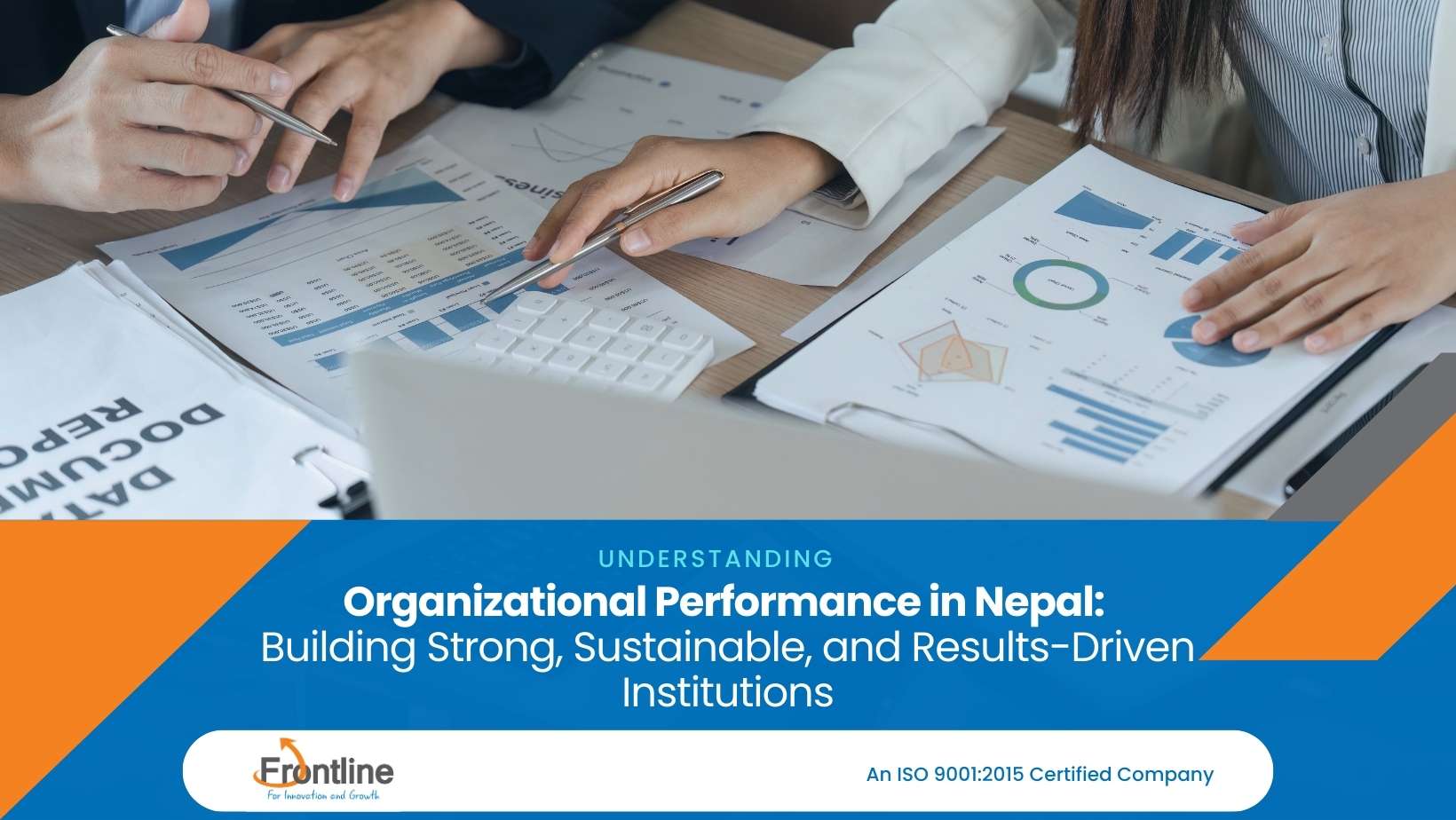
Organizational Performance in Nepal
Nepal’s business landscape has changed considerably over the past decade. Organizations across banking, manufacturing, education, development, and services are operating in a far more competitive and demanding environment than before. Yet a familiar pattern continues to repeat itself across industries. Leadership teams invest significant time and resources into building well-considered strategic plans, only to find that execution falls short and the intended results never fully materialize.
This gap between planning and performance is one of the most persistent challenges facing organizations in Nepal today. Building an institution that performs consistently, adapts to change, and delivers measurable results requires more than a strong strategy document. It requires the systems, structures, and discipline to turn that strategy into daily action.
This article examines what organizational performance actually means, why so many strategies fail during execution, and what Nepali organizations can do to build institutions that are strong, sustainable, and genuinely results-driven.
What Does Organizational Performance Actually Mean?
Organizational performance refers to how effectively an institution achieves its stated goals, using its resources, people, and processes in a coordinated way. It is not limited to financial results, although financial performance is certainly one component. A high-performing organization also demonstrates operational efficiency, employee engagement, customer satisfaction, and the ability to adapt when market conditions shift.
In practical terms, organizational performance is the outcome of three things working together:
- A clearly defined strategy with measurable priorities
- Systems and processes that translate that strategy into daily operations
- Consistent monitoring and course correction based on actual results
When any one of these elements is missing, performance tends to suffer, even if the underlying strategy itself is sound.
Why Strategy Often Fails During Execution
Research across industries has repeatedly shown that a majority of strategic plans, often estimated at somewhere between 60 and 70 percent, fail not because the strategy itself was flawed, but because execution broke down. This pattern holds true in Nepal as much as anywhere else.
There are a few recurring reasons this happens.
Lack of alignment across the organization. A strategy developed at the leadership level frequently fails to cascade down to departments and individual roles. Employees may understand the broad direction of the company without understanding how their own work contributes to it.
Unclear priorities. When everything is labeled a priority, nothing truly is. Organizations that attempt to pursue too many initiatives at once often end up making limited progress on all of them.
Weak performance tracking. Many organizations set goals at the beginning of the year and revisit them only during an annual review. Without a consistent monitoring cadence, small deviations go unnoticed until they become significant problems.
Disconnected performance management systems. In many organizations, the performance management system used to evaluate employees has little connection to the actual strategic priorities of the business. Staff are assessed on activities rather than outcomes that matter to the organization’s direction.
Addressing these gaps is central to building a results-driven institution, and it is where deliberate, structured intervention makes the greatest difference.
The Building Blocks of a Strong, Sustainable Institution
1. Clear Vision, Mission, and Measurable Goals
Every high-performing organization begins with clarity about what it is trying to achieve and why. This goes beyond a mission statement on a website. It means leadership teams have worked through structured planning to define specific, measurable goals that guide decision-making at every level of the organization.
2. Strategic Planning That Reflects Reality
Strategic plans built in isolation, without input from the people who will be responsible for executing them, tend to lose relevance quickly. Structured strategic planning workshops that involve leadership teams directly tend to produce plans that are both ambitious and realistic, with genuine buy-in from the people responsible for delivering them.
3. KPIs and Balanced Scorecards Aligned to Strategy
Key performance indicators give an organization a way to measure progress objectively rather than relying on impressions. A Balanced Scorecard approach, which looks beyond financial metrics to include customer, internal process, and learning and growth perspectives, helps ensure that performance is tracked holistically rather than through a single narrow lens.
4. Strategy Integrated Into Performance Management Systems
One of the most overlooked steps in building a results-driven institution is connecting strategic priorities directly to the performance management system. When individual and team goals are explicitly linked to organizational strategy, employees have a much clearer sense of how their daily work contributes to broader outcomes, and performance conversations become more meaningful.
5. Ongoing Monitoring and Review
Strategy execution is not a one-time event. Organizations that sustain strong performance over time build in regular review cadences, whether monthly, quarterly, or another consistent interval, to track progress against goals and make timely adjustments when circumstances change.
The Cost of Poor Organizational Performance
When organizational performance is weak, the consequences extend well beyond missed targets on a report. Common outcomes include:
- Talented employees becoming disengaged when they cannot see how their work connects to organizational goals
- Resources being spent on initiatives that do not move the organization meaningfully forward
- Leadership teams losing confidence in their own strategic plans after repeated execution failures
- Slower response times when market conditions or customer expectations shift
For organizations operating in Nepal’s increasingly competitive market, these costs can compound quickly, particularly for institutions competing for skilled talent and market share against more agile competitors.
Why This Matters More in Nepal’s Current Business Environment
Nepal’s economy continues to see growth across sectors including finance, education, manufacturing, technology, and development work. As more organizations scale and formalize their operations, the gap between organizations with strong performance systems and those without becomes increasingly visible.
Institutions that build disciplined strategy execution into their culture tend to attract stronger talent, retain customers more effectively, and adapt more quickly when conditions change. Those that continue to rely on informal planning and inconsistent tracking often find themselves reacting to problems rather than anticipating them.
This is precisely why more organizations across Nepal are turning to structured consulting support to strengthen their planning, execution, and performance monitoring capabilities, rather than attempting to build these systems entirely from scratch.
Practical Steps Organizations Can Take Today
Building a results-driven institution does not require an overnight transformation. Organizations can begin with a few practical steps:
- Audit current strategic clarity. Ask leadership and mid-level managers to describe the organization’s top three priorities. Significant inconsistency in the answers is a clear signal that alignment work is needed.
- Simplify the goal list. Reduce the number of active strategic priorities to a manageable set that the organization can genuinely focus on and resource properly.
- Connect goals to performance reviews. Ensure that individual and team performance evaluations reflect the organization’s actual strategic priorities, not just role-specific activities.
- Establish a review rhythm. Set a fixed cadence, monthly or quarterly, to formally review progress against strategic goals and adjust course where needed.
- Bring in outside facilitation where useful. An external perspective can often surface alignment gaps and blind spots that internal teams, close to the day-to-day operations, may not easily see themselves.
Frequently Asked Questions
What is organizational performance? Organizational performance refers to how effectively an institution achieves its strategic goals, encompassing financial results, operational efficiency, employee engagement, and the organization’s ability to adapt to change.
Why do so many strategic plans fail in execution? Strategic plans commonly fail due to poor alignment across teams, unclear or excessive priorities, weak or infrequent performance tracking, and a disconnect between the strategy itself and the systems used to manage employee performance.
What is a Balanced Scorecard and why does it matter? A Balanced Scorecard is a strategic performance management framework that tracks an organization’s progress across multiple perspectives, typically financial, customer, internal processes, and learning and growth, rather than relying solely on financial metrics.
How often should organizations review their strategic performance? Most organizations benefit from a consistent review cadence, commonly monthly or quarterly, rather than waiting for an annual review, since this allows issues to be identified and corrected while they are still manageable.
Can smaller organizations in Nepal benefit from formal performance management systems, or is this only relevant for large companies? Smaller organizations often benefit significantly from formal performance systems, since limited resources make it especially costly to pursue unclear priorities or leave misalignment unaddressed.
Building Institutions That Deliver, Not Just Plan
A well-crafted strategy is only the starting point. The organizations that consistently outperform their peers, in Nepal and elsewhere, are the ones that build the systems, discipline, and culture needed to turn that strategy into measurable, sustained results.
Frontline Consult works with leadership teams across Nepal to close the gap between strategy and execution, through structured strategic planning facilitation, KPI and Balanced Scorecard design, and full integration of strategic priorities into performance management systems. The result is clearer organizational direction, stronger alignment across teams, and measurable improvement in business performance.
Ready to turn your strategy into results? Connect with Frontline Consult today to discuss how our consulting team can support your organization’s performance journey.
357 views